- Home
- /
- Parents' Corner
- /
- Fine motor skills in children: 6 activities to develop dexterity and independence
Fine motor skills in children: 6 activities to develop dexterity and independence
Picking up a small object, stacking blocks, threading beads, or buttoning a coat—these everyday actions require far more precision than they might seem! Through repetition, a child gradually develops fine motor skills—an essential ability for gaining independence and, little by little, preparing for the movements required for writing.
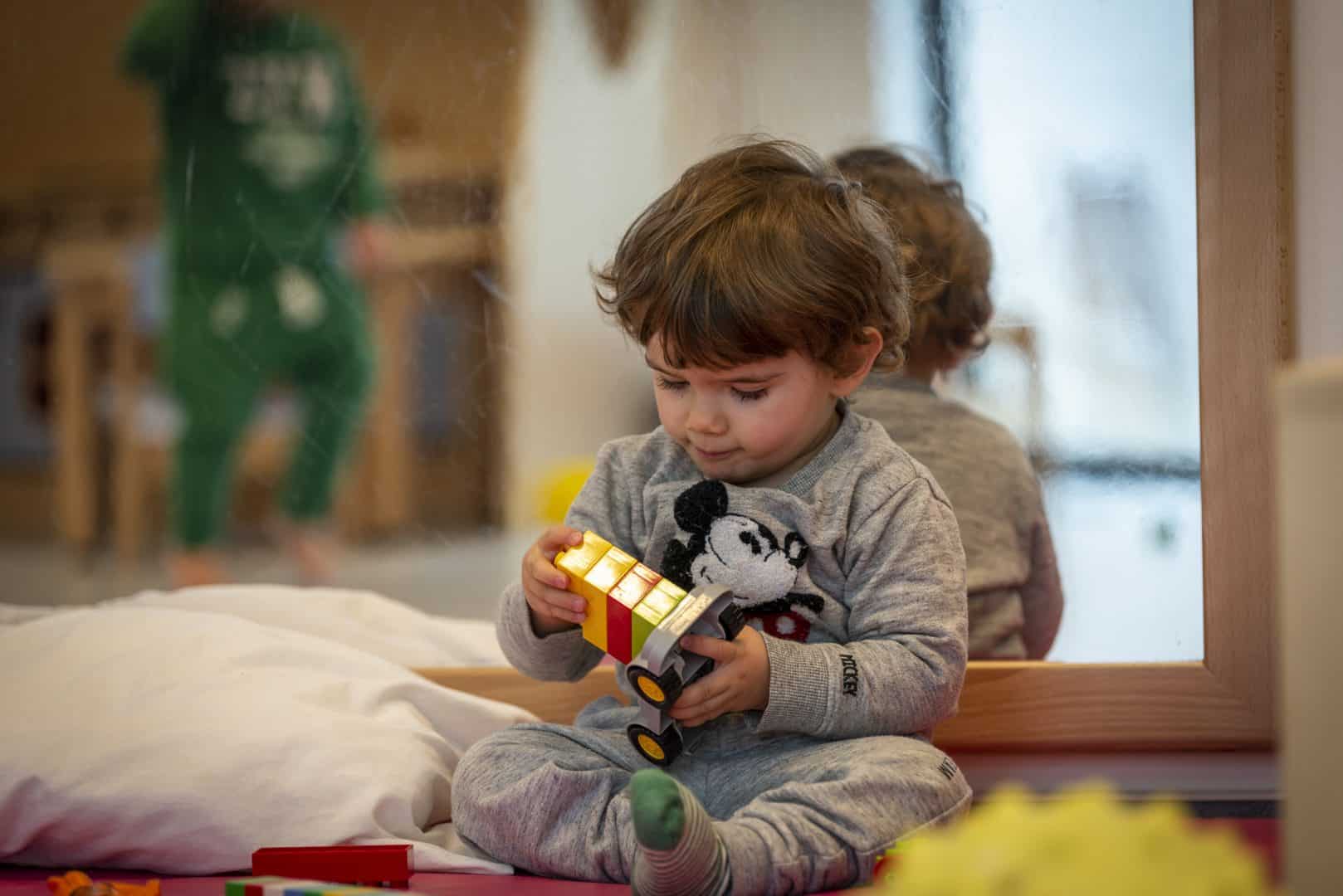
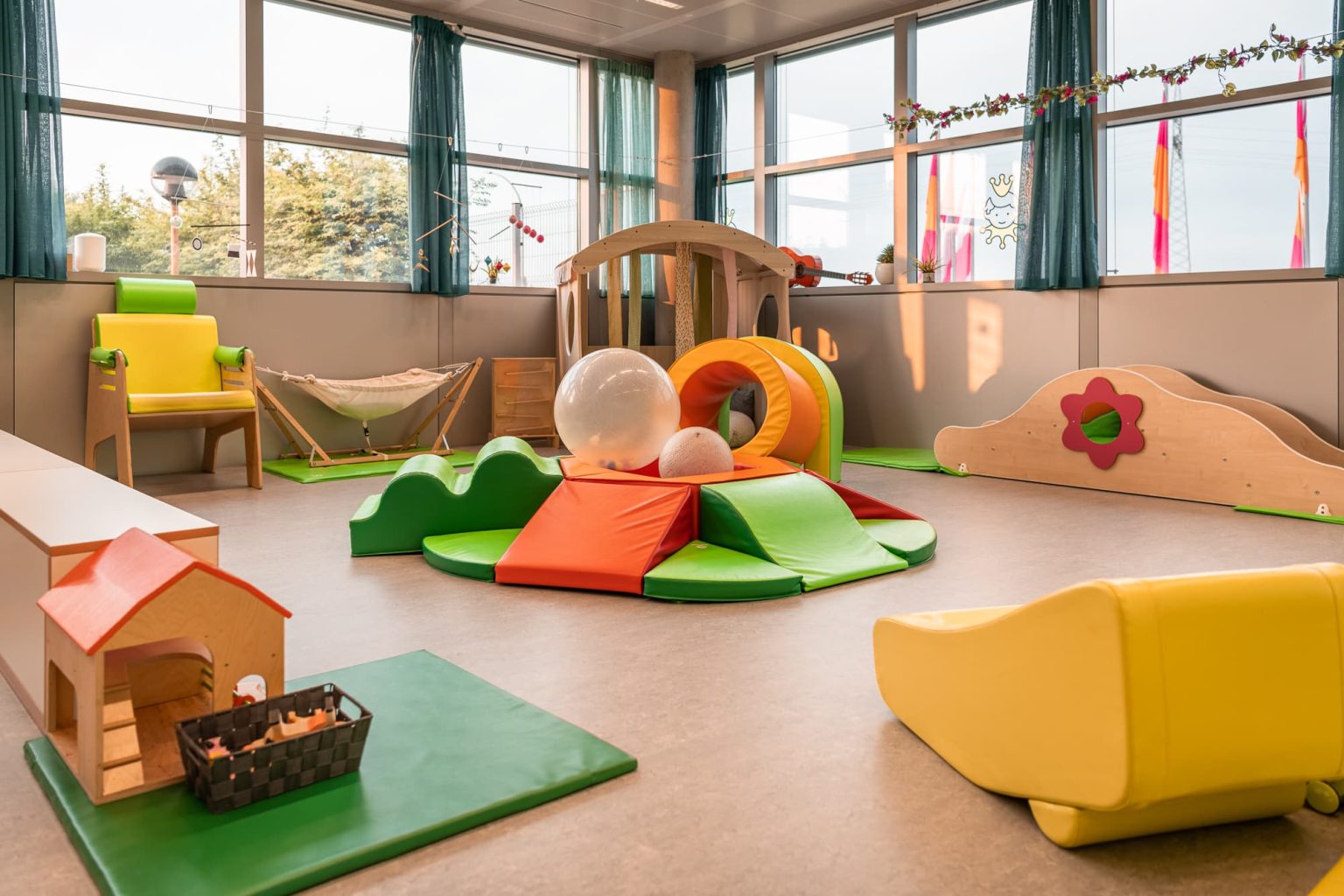
In our Maisons des Enfants, inspired by Montessori education, these skills naturally develop through everyday experiences. With a carefully prepared environment, appropriate learning materials and guidance from our educators, every child can explore, experiment and progress at their own pace.
But what exactly are fine motor skills? How do they develop, and what activities can you offer children aged three and over?
What are fine motor skills?
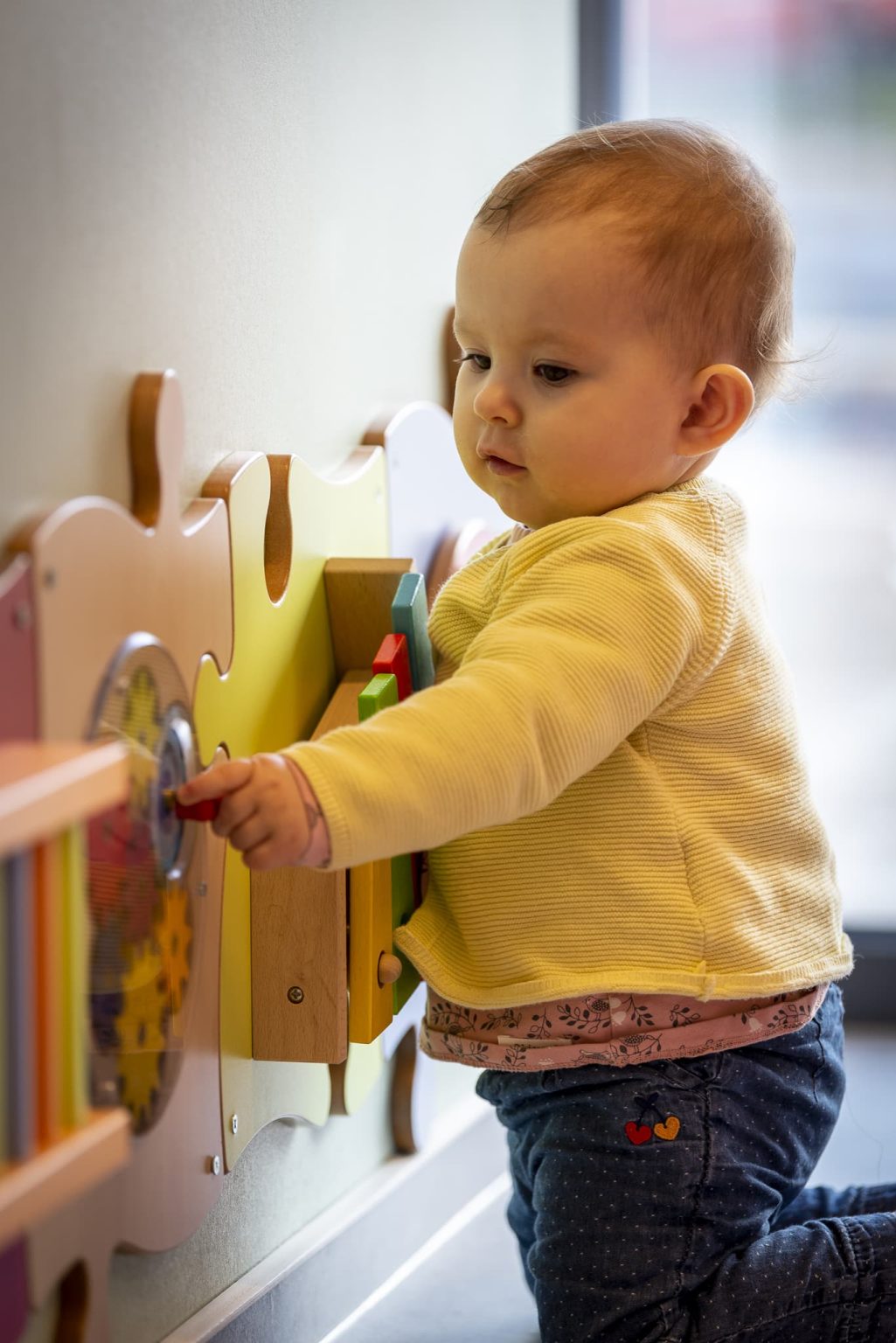
Fine motor skills refer to the ability to perform precise movements using small muscles, particularly those in the hands, fingers and wrists.
They are involved in many everyday activities: picking up an object, handling a puzzle piece, turning the pages of a book, using a spoon, drawing or cutting with child-safe scissors.
Fine motor skills also involve hand-eye coordination, which is the ability to coordinate what we see with the movements we make. When a child stacks blocks or pours water into a glass, they learn to adjust their movements according to what they observe.
Fine motor development is therefore about much more than preparing for handwriting. It also supports children’s independence, exploration and ability to interact with their surroundings.
How do fine motor skills develop in children?
Fine motor development relies partly on the maturation of the nervous system and on the experiences children accumulate every day.
Movements gradually become more intentional, coordinated and precise. Children refine the way they grasp objects, learn to use both hands together and improve their hand-eye coordination.
Early fine motor skills begin to emerge during the first months of life and continue to develop throughout early childhood. Between the ages of three and six, a wide range of activities can help children improve their precision, develop manual dexterity and prepare for the movements involved in writing.
Hand preference also emerges gradually during development. It is important to let children choose which hand they use naturally, without trying to impose a dominant hand.
Every child develops at their own pace. The goal is not to achieve perfect movements as early as possible, but to provide opportunities for exploration and help children build confidence in their abilities.
6 Montessori activities to develop fine motor skills
The good news? There is no need to introduce endless exercises or buy sophisticated equipment. Hands-on activities, everyday tasks and Montessori-inspired experiences already offer plenty of opportunities to practise fine motor skills.
1. Stacking, fitting and building
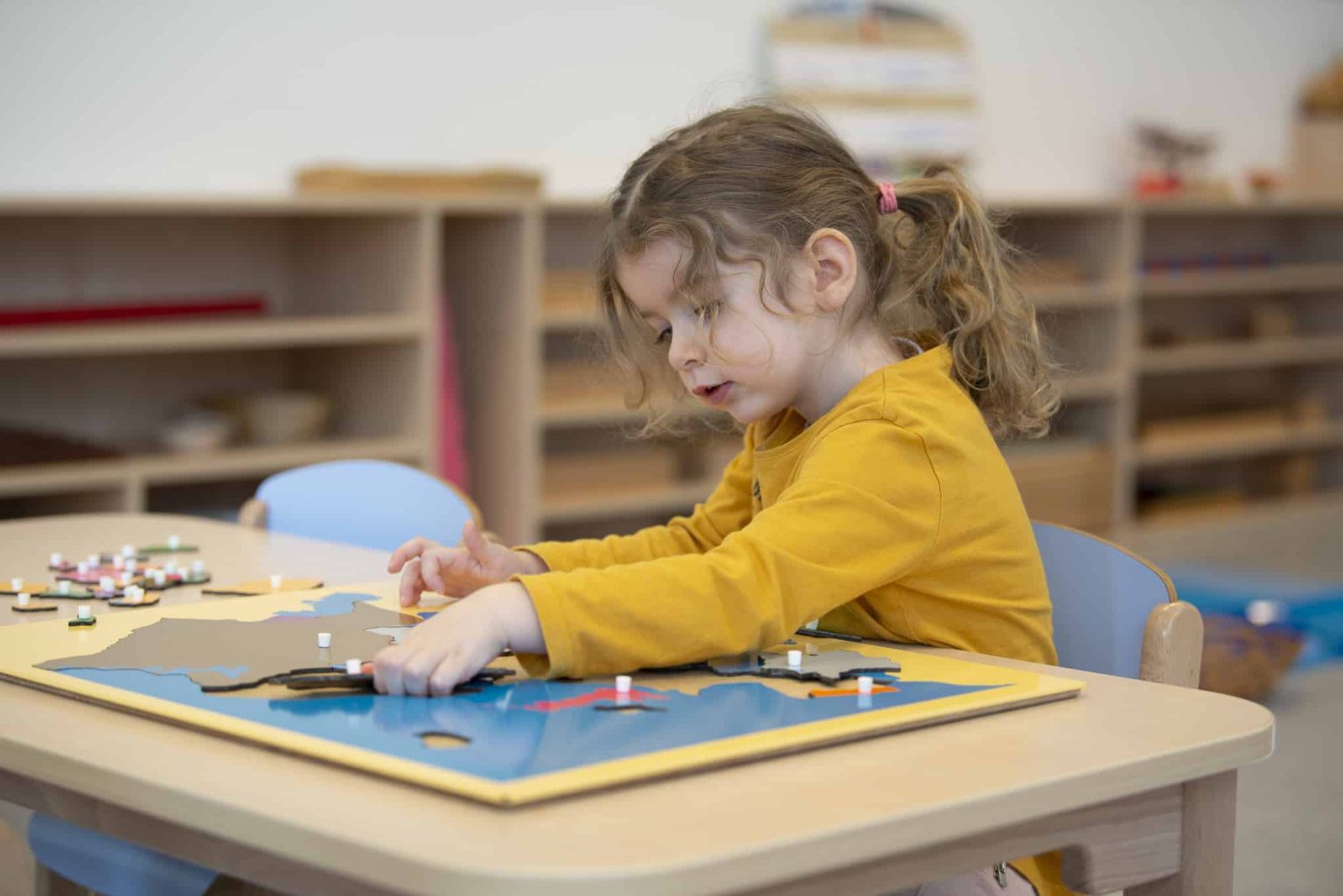
Wooden blocks, shape sorters and puzzles encourage children to adjust their movements, observe shapes and handle pieces precisely.
These activities develop hand-eye coordination and coordination between both hands. They also encourage concentration and perseverance: when a tower falls over, it is simply an opportunity to try again!
At home: Offer your child a few blocks or an age-appropriate puzzle, then let them work out their own solutions.
2. Drawing, painting and modelling
Painting with a brush, playing with modelling dough, drawing or making collages: creative activities involve a wide variety of movements.
Children exercise their fingers and wrists, discover different ways to hold tools and gradually learn to control their movements more precisely. They also develop their creativity by exploring their imagination freely.
At home: Provide paper, age-appropriate pencils, paint or modelling dough. Let your child experiment without trying to control the outcome.
3. Taking part in everyday tasks
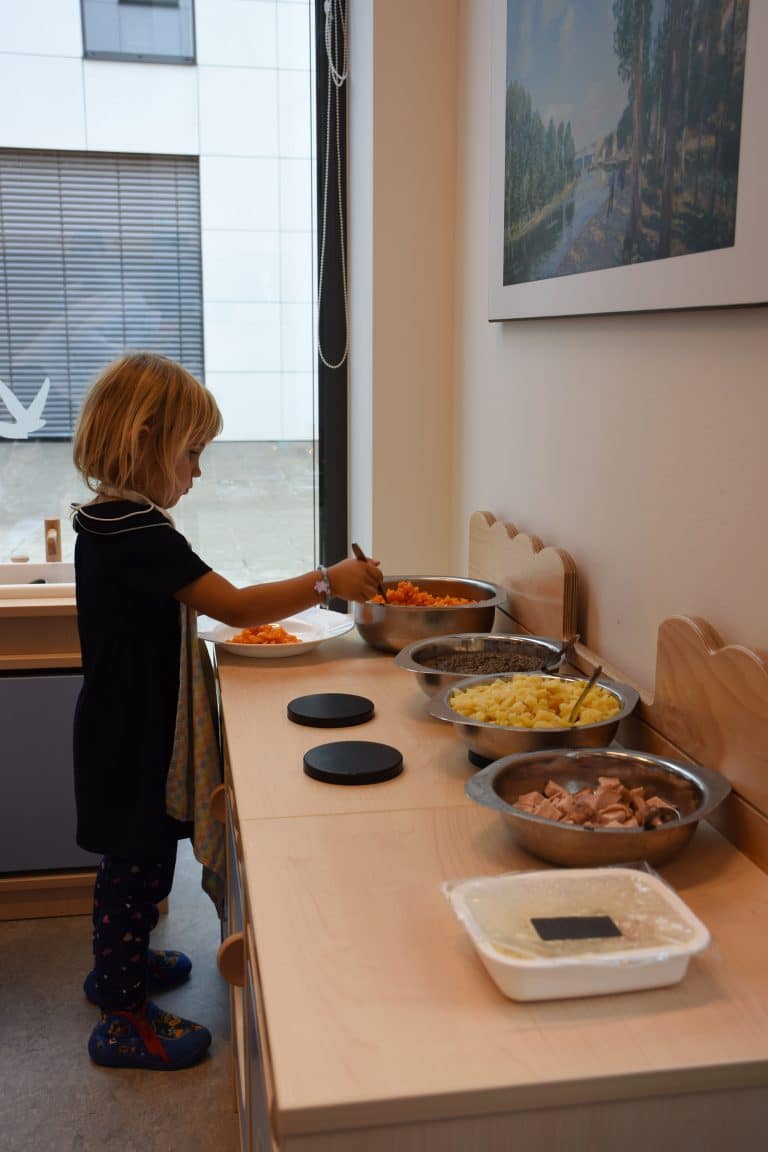
Getting dressed, buttoning a jacket, combing their hair, brushing their teeth or helping prepare a meal all provide opportunities to practise fine motor skills.
These activities require children to coordinate several movements and control their fingers. They also support the development of independence, as children gradually learn to do for themselves what they are capable of doing.
At home: Give your child time to try fastening their coat, setting the table with suitable items or helping with a simple cooking task under your supervision.
4. Exploring Montessori practical life activities
In Montessori education, practical life activities play an important role. They allow children to practise actions they observe in their surroundings while developing precision and independence.
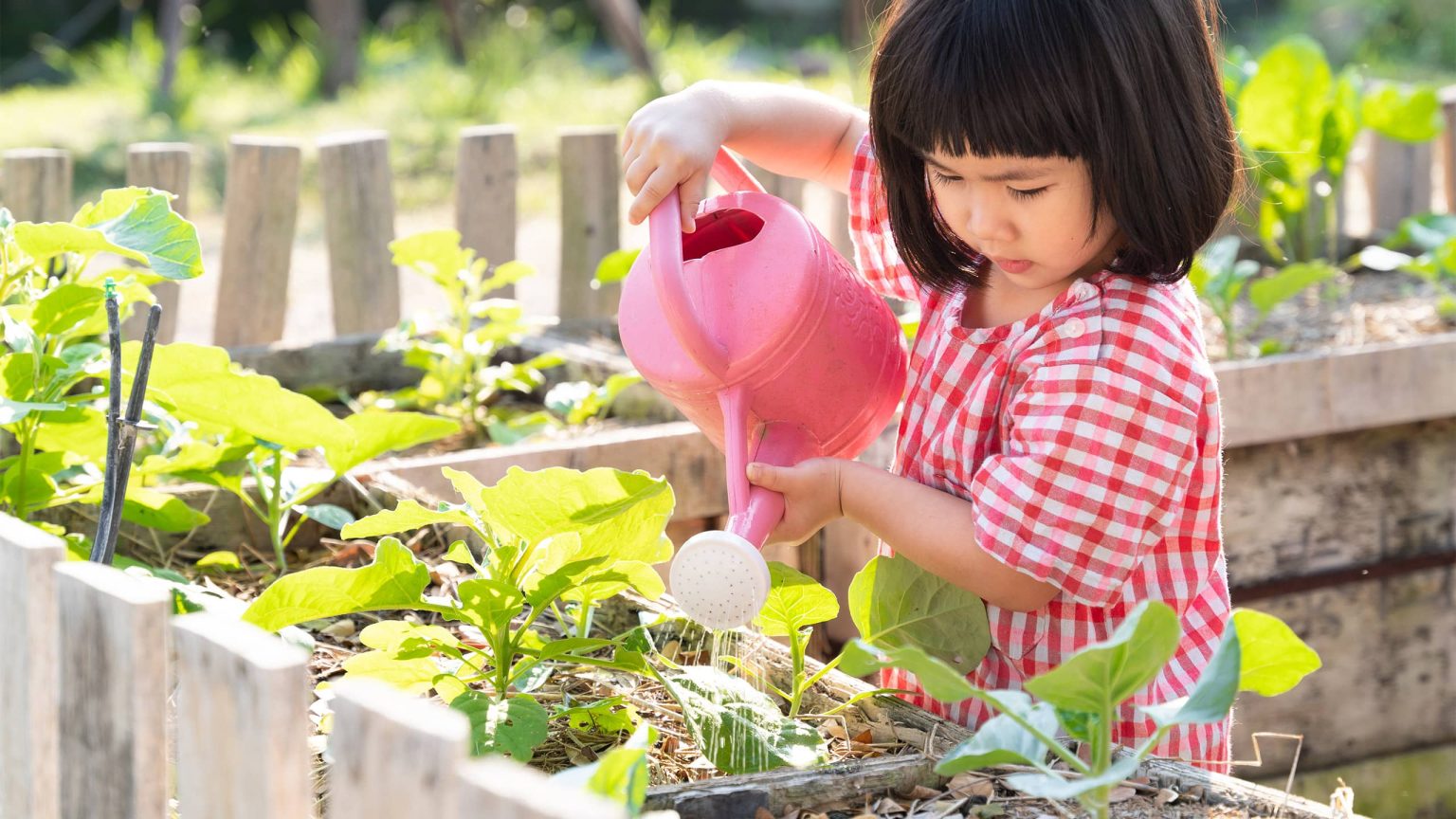
Transferring suitable-sized objects, moving small items with a spoon, pouring water from one small jug into another or using a sponge to clean a surface are examples of activities that develop hand-eye coordination and the ability to use both hands together.
These movements also involve the three-finger grip, using the thumb, index finger and middle finger. This grip is used in many fine motor activities and plays a role in holding a pencil.
At home: Set up a simple activity with age-appropriate materials and a limited number of objects. Demonstrate the movement slowly, then let your child have a turn.
5. Exploring sandpaper letters and tracing in sand
In the Montessori approach, sandpaper letters help children discover letter shapes by combining visual, tactile and movement-based experiences.
By tracing the outline of each letter with their fingers and then gradually reproducing the shape in sand or on a slate, children refine their movements and develop finger and wrist mobility.
These experiences help prepare children for handwriting without rushing the process or expecting them to write before they are ready.
At home: Encourage playful drawing and tracing activities that match your child’s interests. Enjoying the process of exploring shapes and making marks is more important than reproducing a letter perfectly.
6. Throwing, catching and playing with a ball
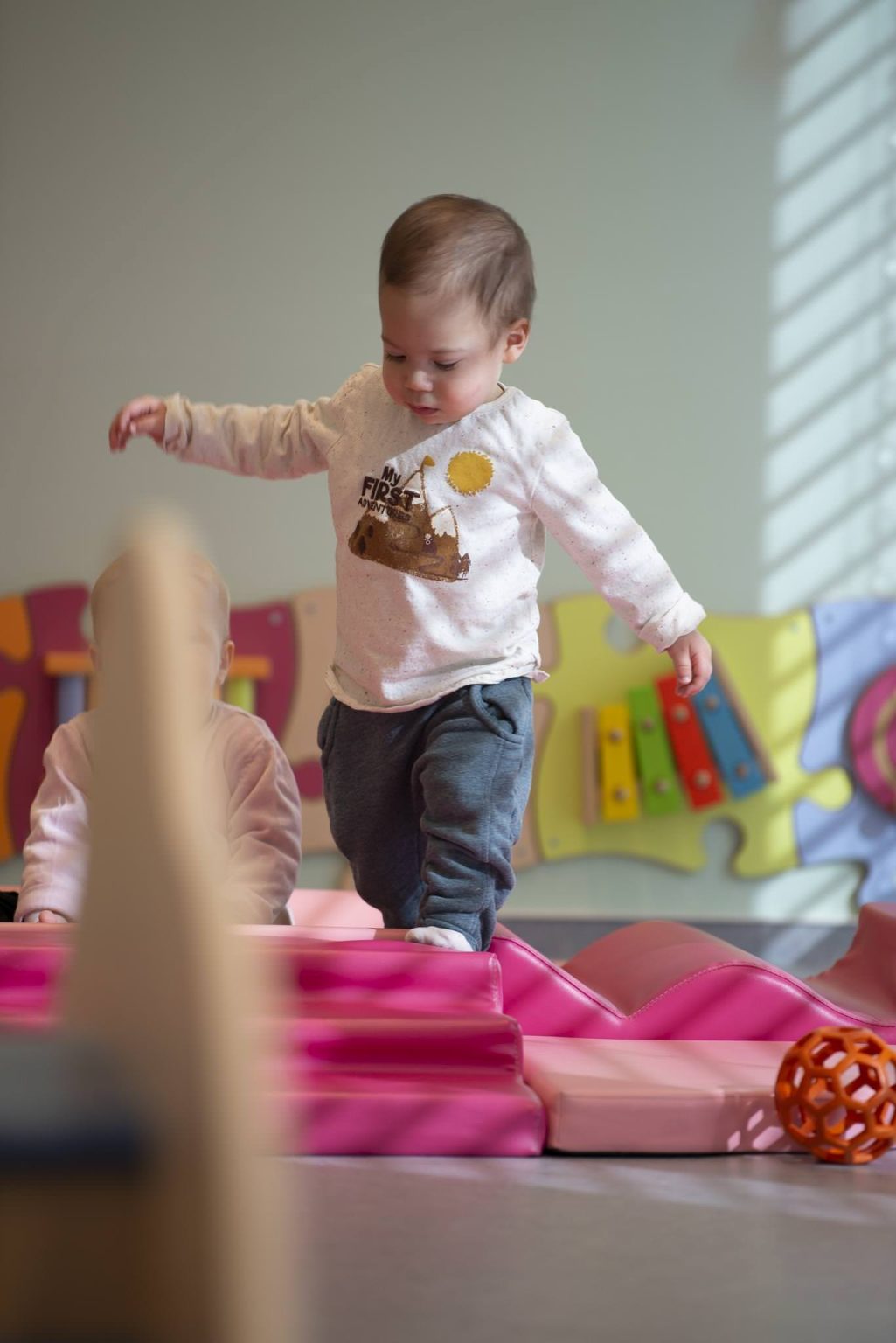
Fine motor skills are not developed only while sitting at a table! Throwing a ball, trying to catch it, bouncing it or aiming at a target all involve hand-eye coordination and the use of both hands.
These games combine precise movements, observation and physical activity. They also give children an opportunity to move around and experience different types of movement.
At home: Offer a soft ball suitable for your child’s age in a clear, open space. Start with simple throwing and catching games, then let the activity evolve according to their interests.
How can you support your child without doing things for them?
To develop fine motor skills, children need time, repetition and the freedom to experiment. Adults play an essential role by preparing a suitable environment, demonstrating movements when necessary and remaining available to provide support.
A few simple principles can make a real difference:
- Adapt activities to your child’s abilities: An activity that is too difficult may discourage them, while an accessible challenge gives them an opportunity to progress.
- Focus on the experience rather than the result: A simple activity that children can explore freely is often more valuable than a series of imposed exercises.
- Give them time to try: Avoid stepping in immediately when they encounter a difficulty. Observe them and allow them the opportunity to find a solution.
- Recognise their efforts: Encourage perseverance and curiosity rather than focusing solely on the final result.
- Keep safety in mind: Choose age-appropriate materials, supervise activities and keep small objects that could cause choking or accidental ingestion out of reach.
In the Montessori approach, independence develops gradually. Adults do not need to explain everything or correct every movement. Their role is to support children, respect their individual pace and give them the opportunity to discover what they can do.
Because learning to do things independently often begins with one very small movement.
Would you like to discover our Montessori approach? Explore Montessori education at L’Enfant Roi.
Further reading
To explore the subject in greater depth, you can also consult these resources:
- UNICEF Parenting: learning activities for babies and toddlers, with practical ideas for supporting early learning and fine motor development through play.
- UNICEF Luxembourg: the importance of play in early childhood development, which explains how play supports children’s physical, cognitive, social and emotional development.
These resources provide additional information about child development and learning through play. If you have questions about your child’s development, your paediatrician or another healthcare professional can offer advice tailored to their individual needs.